Cricket Bowling Run-Up: A 5-Step Checklist for Consistent Line and Length
Ask a bowler who has just sprayed a spell of half-volleys and long hops what went wrong, and the answer is rarely about the wrist or the seam position. It is almost always the run-up. When the approach is rushed or crooked, everything after it becomes a guess: the front foot lands in the wrong place, the front arm goes early, the head falls away, and the ball goes wherever the momentum happens to point.
Line and length are not separate skills you bolt on at the end of the action. They are the natural result of an approach you can repeat without thinking. Here is a five-step checklist you can work through in the nets this week.
Why the Run-Up Deserves More of Your Practice Time
The run-up does two jobs. It builds the momentum that gives you pace, and it sets the geometry of everything that follows. Your delivery stride is decided long before you reach the crease — by your stride pattern, your body angle and the point where you leave the ground.
That is why small faults get amplified. Half a metre of drift at the top of your mark becomes a foot of drift at the crease, and a foot at the crease is the difference between hitting the top of off stump and serving up a wide half-volley. Most bowlers spend their net time on variations. The ones who bowl tight, repeatable spells spend it on the boring stuff instead.
Step 1: Own Your Mark and Measure It Properly
Start with a run-up you can repeat at seventy per cent effort, then build from there. Do not copy a fast bowler off the television; their run-up suits their body, their stride length and their pace.
- Measure from the stumps. Walk back from the stumps to a comfortable starting point, counting your steps out loud as you go.
- Use a physical marker. A cone, a chalk line or a spike in the grass. Guessing your mark from memory is how drift creeps in.
- Stand still before you start. At the top of your mark you should be able to stop, take a breath and look at your target. If you are already moving, your run-up is too long or too fast.
- Use the same mark in matches. Change it in the nets, never mid-spell.
Step 2: Build Rhythm, Not Just Speed
A good run-up accelerates gradually. The first few steps are almost casual; the last three or four are the quickest. The rhythm should feel like a build, not a sprint with a stumble at the end.
The most common flaw here is a fast start and a nervous half-step before the jump. It feels energetic, but it kills your timing and shortens your delivery stride, which is exactly how front-foot no-balls happen.
Two cues that fix most rhythm problems
Count your steps out loud during the run — the numbers should arrive at even intervals, with the last count landing on your jump. If the gap between the final two numbers is shorter than the rest, you are over-striding.
Then run through the crease rather than to it. Bowlers who aim at the popping crease tend to decelerate. Bowlers who aim past it keep driving forward, which keeps the head steady and the front foot pointing at the target.
Step 3: Load and Gather Without Falling Away
The gather is the link between the run and the delivery. As your back foot lands, your hips and shoulders should be sideways-on or close to it, your knees flexed, and your weight loaded over that back leg. The front knee then drives up and through to give you height and direction.
Watch your head here. If it falls towards the off side or towards square leg, your body is trying to tell you something — usually that your run-up has pushed you too wide, or that you are reaching for the crease instead of running into it. Keep the head still and slightly ahead of the body, and the rest of the action tends to straighten itself out.
Step 4: Hit the Crease in the Same Spot Every Time
This is where the checklist pays off. Pick a target for your front foot — a coin-sized patch just behind the popping crease — and put a marker there in the nets. Bowl six balls and check the footmarks. If they are scattered, the fault is usually earlier in the run-up, not in your delivery stride.
For no-balls, resist the instinct to shorten your run-up. Shortening it changes your timing and often makes the problem worse. Check three things instead: whether your last stride has become a stutter, whether your run-up has drifted wider off the return crease, and whether your eyes are on the target or on the umpire's feet.
Step 5: Follow Through and Reset
Finish the action. A truncated follow-through means you braked before release, which costs pace and sends the ball floaty. Let your back leg come through and carry you a few steps down the pitch, with your weight moving forward.
Then reset the same way every time. Walk back to your mark, find your marker, stand still, look at the target, breathe. That little routine is what makes the fifth over feel like the first.
Common Faults and What They Usually Mean
- Losing your line to the leg side: you are drifting wide at the top of your mark and swinging across the run.
- Consistent front-foot no-balls: your run-up is too fast for your final stride, so you are reaching for the crease.
- Length dropping short in later overs: fatigue shortening your run-up, or a follow-through that has become a stop.
- Wobbling seam and no swing: an inconsistent gather, usually caused by the head falling away.
Putting the Checklist to Work
Use it in blocks, not all at once. In your next nets session, bowl ten balls focusing only on Steps 1 and 2. Then ten balls on the gather and the front-foot landing spot. Then a final ten where you bowl with a single target: top of off stump, or a length you have marked on the strip.
A simple drill when things go badly wrong: bowl six balls from a shortened run-up with no jump, just walking into the crease and delivering with a steady head. It strips the action back to its essentials and usually reminds you what a clean, repeatable release feels like. Then add the run-up back one step at a time.
Expect it to feel mechanical at first. Run-ups are supposed to be dull. The exciting part comes later, when you can run in without thinking about any of it and still know, the moment the ball leaves your hand, roughly where it is going to land.
A final note: if you feel persistent pain, particularly in the lower back, ankles or knees, stop and speak to a doctor or a qualified physiotherapist before you keep bowling. Workload and technique changes are worth getting checked rather than bowling through.
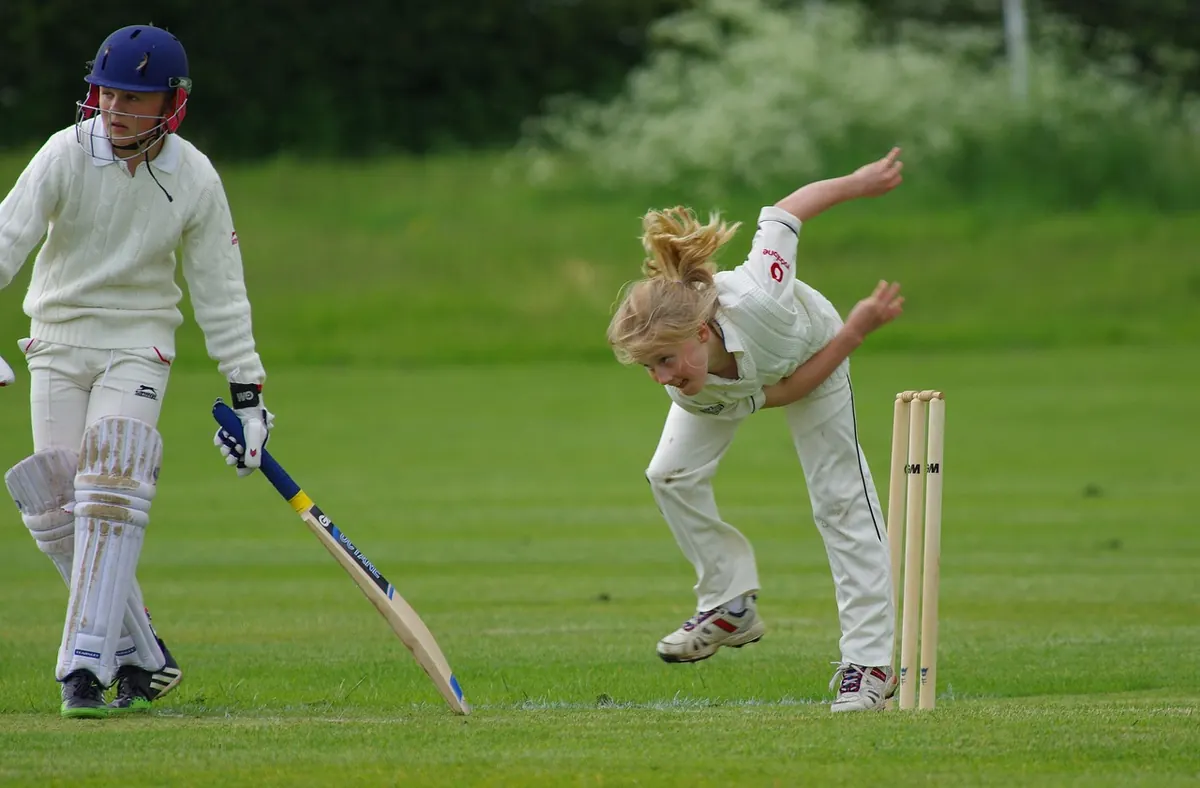
Photo: shents / Pixabay