Cricket Wicketkeeping Basics: Stance, Gloves, and Footwork Drills
A wicketkeeper touches the ball more often than anyone else on the field and gets fewer second chances than anyone else. That combination is why the position rewards good habits more than natural talent. A keeper who stands well, catches with soft hands and moves their feet early will take chances that a flashier keeper drops.
Whether you keep for a junior side on a Sunday morning or you are competing for the gloves in a senior team, the foundations are identical. Here is how to build them, and how to keep them sharp when nobody is around to throw you a ball.
The Stance: Low, Balanced, Ready
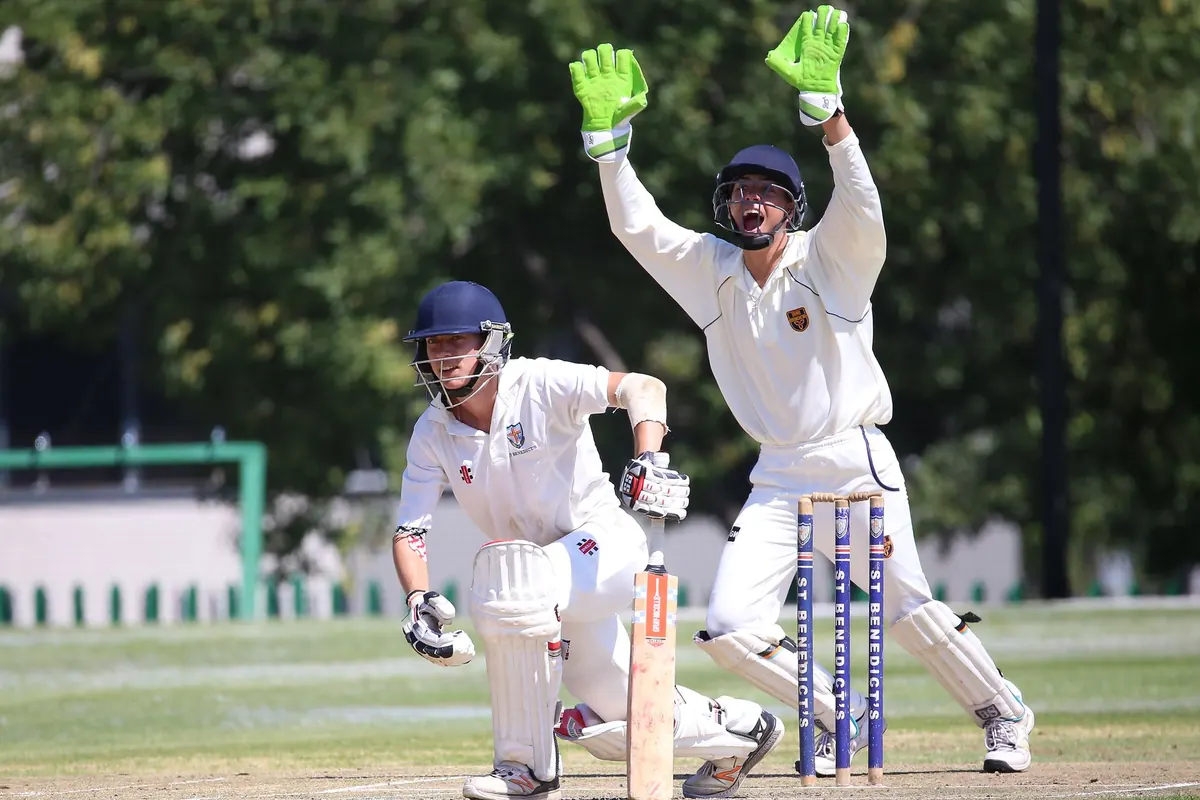
Everything starts before the bowler releases. Set your feet a little wider than your shoulders, keep your weight on the balls of the feet, bend your knees and drop your backside. You want a position you could hold comfortably for thirty seconds — not a deep squat that burns your thighs by the fourth over.
- Feet: shoulder-width or slightly wider, toes pointing roughly forward.
- Weight: on the balls of the feet, heels just brushing the ground.
- Hands: low and in front of the body, palms facing the bowler, elbows softly bent.
- Head: still, eyes level, locked on the ball from the moment it leaves the hand.
- Back: reasonably flat rather than rounded, chin up enough to see clearly through the stumps.
Two faults show up constantly. The first is standing too tall, which forces you to bend late and snatch at the ball. The second is hands that drift up towards the knees, so anything with a low bounce sneaks underneath the gloves. Keep the gloves low and let the ball travel to them.
Standing Back and Standing Up
Standing back to the seamers and standing up to the spinners are different jobs, even though they share the same base.
Back to a medium pacer, you want a wider base, a slightly deeper crouch, and plenty of distance behind the stumps. Your hands stay low and you take the ball in front of the body, giving with it as it arrives. If the ball is really flying, the catch is often made with the fingers pointing down and the elbows relaxed.
Up to a spinner, the ball comes slower but the demands change. You start closer to the stumps, stay low for longer, and your hands come up with the ball rather than waiting for it. The stumping is your reward for quick feet and a still head. Watch the ball off the pitch, not the batter's feet — guessing will cost you more wickets than it wins.
Getting Your Gloves Right
Fit and Wear
Keeping gloves should feel snug without crushing your fingertips. If your fingers are jammed into the ends of the gloves, the ball will land on your knuckles and pop out. A thin pair of inner gloves helps with sweat and comfort, and most keepers prefer them once they are used to the feel.
New gloves are stiff. Use them in training before a match, catch plenty of balls in the pocket, and work the leather with your hands. Some keepers use a small amount of glove oil to soften the palm; use it sparingly, because over-oiled leather goes floppy and offers no protection at all.
Catching With Soft Hands
The ball should be taken in the palm and web of the glove, not on the fingertips. As it arrives, let the hands give back slightly — a few centimetres is enough. Stiff, snatching hands turn simple takes into dropped catches, especially when the ball is swinging or the pitch is uneven.
Keep your head still and watch the ball all the way in. It sounds obvious, but most dropped catches behind the stumps come from the eyes moving up to check where the ball has gone before it has actually arrived.
Footwork Drills You Can Do Alone
You do not need a partner, a net or a wicket to improve your movement. Set aside fifteen minutes and work through these:
- Lateral shuffle. Place two markers a metre apart. Shuffle side to side between them, staying low the whole time, for thirty seconds. Rest and repeat four times.
- Lunge and recover. Step out to one side into a keeping crouch, hold for two seconds, then push back to the middle. Alternate sides for twenty repetitions.
- Wall catches. Throw a tennis ball against a brick or concrete wall and catch it in your gloves. Vary the height and the distance so you practise high takes and low ones. This is the best solo drill for soft hands.
- Shadow keeping. Stand in your crouch and imagine a ball. Move your feet and hands for a delivery down the leg side, then one outside off, then one straight. Ten imaginary balls, staying low throughout.
- Balance holds. Stand on one leg in your crouch for twenty seconds on each side. Strong ankles and hips keep you steady when you have to move late.
If you have a partner, add a reaction drill: stand facing away, turn on their call, and take a catch thrown from a few metres away. It trains the same first movement you need when a thick edge flies.
Common Mistakes to Fix Early
Standing up too soon is the most frequent one. Rising out of the crouch as the ball is bowled puts you in no position to move. Stay down, and let the ball tell you where to go. Reaching with one hand when two would do is another; take everything you can with both gloves and the body behind it.
Finally, quiet feet. If you are not moving before the ball arrives, you are reacting too late. Small, early movements beat big, late ones every time.
A Simple Weekly Routine
Three sessions a week is plenty to build real improvement. Warm up with five minutes of light jogging, ankle rotations and gentle squats. Then spend ten minutes on wall catches, ten on the lateral shuffle and lunge drills, and five on shadow keeping with a focus on staying low.
Add live practice whenever you can get someone to bowl at you, and ask them to mix up the bounce and the line rather than feeding you easy catches. Keep a note of what you drop — the pattern will usually point at a footwork or hand-position problem rather than bad luck.
If you pick up knee, back or hand pain that does not settle with rest, get it looked at by a physiotherapist or doctor rather than bowling through it. A keeper's career is built on the ankles, knees and hands, and looking after them is part of the job.
Photo: Patrick Case / Pexels