How to Bowl a Basic Off-Spin Delivery: Step-by-Step for Beginners
Off-spin is the most forgiving way to start bowling spin. You don't need enormous hands, a magical wrist, or years of practice before the ball does something. You need one reliable grip, a repeatable action, and the patience to bowl at the same spot until your arm remembers it. For a right-arm bowler to a right-handed batter, the ball pitches around off stump and turns in towards the pads. That is the whole job. Everything below builds towards doing that one thing well.
What a Basic Off-Spin Ball Should Do
Before you chase turn, chase where the ball pitches. A beginner off-spinner's best delivery is not the one that rips square — it's the one that lands on a good length on or just outside off stump, six balls in a row.
What counts as a good length for spin? Roughly the spot where the batter is stuck between coming forward and going back. If the ball is landing under the bat, you're too full. If it's landing halfway down, you're too short and the batter can sit back and cut or pull you. Find the in-between length and live there.
Flight does a lot of the work. Push the ball up above the batter's eyeline and let it dip late. When you toss it up, the batter has to reach for it, and the turn has time to bite. Flat off-spin is easy to line up. Loopy off-spin is not.
The Grip: Fingers First, Palm Never
Hold the ball in your bowling hand with the seam roughly upright, angled very slightly towards fine leg. Place your index and middle fingers across the seam with a comfortable gap between them — not touching, but not split wide apart. The first joints of those two fingers rest on the ball. Your thumb sits underneath as a support, angled slightly to one side of the seam. The ring and little finger curl in towards the palm.
The ball should sit on your fingers, not in your palm. If you can slide a pencil between the ball and your palm, you're about right. Gripping it hard in the palm is the single most common reason beginners get no spin.
Grip checkpoints
- Ball resting on the fingers, palm mostly empty
- Index and middle fingers straddling the seam with a gap
- Thumb underneath for balance, not for squeezing
- Hand relaxed — tension in the fingers kills revolutions
Check the grip every time you pick the ball up. It takes two seconds, and it's the one part of bowling you can control completely.
Run-Up, Gather and Load
Spinners don't need a long, fast run-up. Six to eight paces is plenty. Come in at a slight angle rather than straight down the pitch — around fifteen to twenty degrees off the line of the stumps. You want to arrive at the crease side-on enough that your bowling arm can come over the top without your body getting in the way.
The gather is a small jump or load before delivery. As you take off, your front arm reaches up and forward, then pulls down towards your hip as the bowling arm comes through. Your front leg braces at the crease. Your head stays still and your eyes stay locked on the target.
Mark your run-up with a couple of cones or a pair of shoes, and start from the same place every ball. Rhythm beats speed every time. If your run-up changes, your release point changes, and your length disappears.
Release: Rip the Fingers, Don't Push the Ball
The bowling arm comes over high, close to the ear and close to the line of the stumps. Your wrist is cocked slightly. As the arm passes your head, the index and middle fingers roll over the outside of the ball from left to right. Picture flicking water off your fingers, or pulling the string on a spinning top. This roll is what puts revolutions on the ball.
Do not push the ball out like a shot put, and do not try to bowl fast. If you bowl with a rigid wrist and a flat palm, the ball will skid on straight and the batter will thank you. The last two things to touch the ball should be those spinning fingers.
Spin comes from the fingers, not the shoulder. The shoulder gives you accuracy; the fingers give you turn.
Keep your head still through the whole action. A head that falls away to the off side drags your line with it, and you'll spray the ball wide of off stump without understanding why.
Follow-Through and Finish
Let the arm finish. After release, the bowling arm swings down and across your body towards the opposite hip, your back leg comes through, and you end up balanced on the front foot, watching the ball land. A proper follow-through keeps you from decelerating at release, which is what makes the ball drop short.
Finish ready to field. Off-spinners get a lot of return catches because the batter is playing against the turn and hitting the ball back towards you. If your follow-through leaves you off balance, you'll spill those chances.
Practice Plan and Common Mistakes
Spin bowling rewards repetition more than anything else. Try this sequence in a net session:
- One-step bowling. No run-up. Start in your delivery stride and just gather and release. Twenty balls, one target.
- Target work. Put a cone, a single stump or a sheet of paper on a good length at off stump. Bowl thirty balls and count how many land on it.
- Spin-up drill. Stand still with your grip and spin the ball up into the air, watching the seam. If the seam wobbles, the ball isn't coming out cleanly.
- Six in a row. Bowl six balls over the wicket at a single target, then six around the wicket. Only move on when you can land most of them.
- Bowl to a batter, or a chair. A chair works fine when there's no one around. Bowl at it, not at the stumps, and see how often the ball beats the inside edge.
Mistakes to watch for
- Gripping in the palm and pushing the ball out
- Stopping the arm at release instead of following through
- Changing your run-up and starting point every over
- Trying three variations in your first month instead of one stock ball
- Falling away with the front shoulder, which ruins your line
Keep It Simple for the First Month
Your only goal early on is a stock ball you can land on demand. Pick one target — a good length at off stump — and measure yourself honestly: how many out of thirty landed where you wanted? When you're hitting twenty, add a small change, like a slightly wider line or a faster one. Not before.
Warm up your shoulder and back before you bowl, and build up your overs gradually rather than bowling for two hours straight after a month off. If you get persistent shoulder, elbow or lower back pain, get it checked by a doctor or physiotherapist instead of bowling through it. A sore action becomes a bad habit fast.
Land it, spin it, repeat it. Turn comes later. Control comes first, and control is what keeps you in the attack.
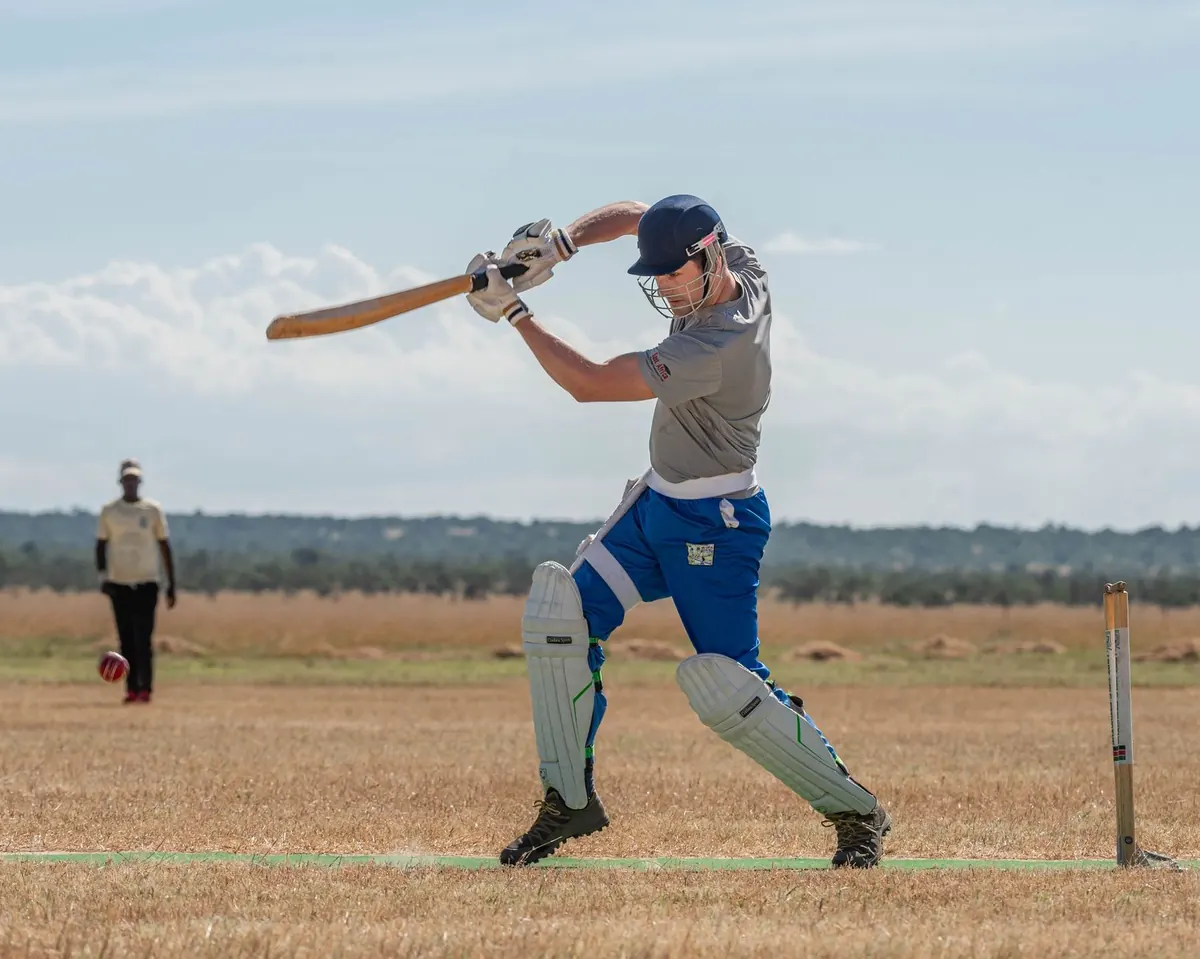
Photo: shents / Pixabay